
When choosing a PA speaker, many buyers focus on power, size, and brand. But there’s one technical term you absolutely shouldn’t ignore—SPL, or Sound Pressure Level. Understanding SPL helps you find the right speaker for your needs, whether you're DJing, hosting live events, or throwing outdoor parties.
What is the SPL for?
SPL stands for Sound Pressure Level, and it measures the pressure variation caused by a sound wave. It’s expressed in decibels (dB) and tells you how loud a sound is.
SPL measures these air pressure variations and quantifies how intense or loud the sound is. It is commonly used to describe the loudness of audio equipment, environmental noise, and other sound-related phenomena. Therefore, It's important to check this index when you are going to buy a PA system.
It is generally understood that a sound energy doubles for every 3dB increase, and due to the non-linear relationship of the human ear's perception of loudness, a typical increase of 10dB is required for doubling the perceived loudness.
-
A 3 dB increase = sound intensity doubles
-
A 10 dB increase = perceived loudness is twice as loud to the human ear
-
A 20 dB increase = sound is 10 times more intense
Here is a detailed explain for SPL ----- If I have a speaker with a sensitivity of 100 decibels, to increase the sound output to 103 decibels, I need to double the power. Therefore, this speaker would require 2 watts to produce 103 decibels, 4 watts for 106 decibels, 8 watts for 109 decibels, and 10 watts for 102 db. You can begin to understand why getting a speaker to play very loudly requires a substantial amount of power. You can check this photo if you are not clear.
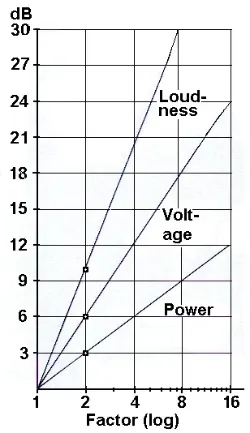
Double or twice the loudness = factor 2 means about 10 dB more sensed loudness level (psycho acoustic)
Double or twice the voltage = factor 2 means 6 dB more measured voltage level (sound pressure level)
Double or twice the power = factor 2 means 3 dB more calculated power level (sound intensity level)
In this way, if the initial SPL measurement at the party is 90 dB. Now, if the band decides to crank up the volume, and this SPL increases to 100 dB, it might seem like just only a 10 dB difference. However, in reality, that 10 dB increase represents a sound that is 10 times more intense!
Now, let's assume you move closer to the stage, and your new SPL measurement is 110 dB. This might seem like a 10 dB difference from the previous measurement of 100 dB. However, once again, this actually signifies that the sound has intensified tenfold compared to the 100 dB level.
So, SPL provides a way to quantify and compare the intensity of sound. It's logarithmic nature reflects how our ears perceive loudness. Small changes in decibels can correspond to significant changes in how we hear and feel sound.
How SPL Affects Human Perception
Not all decibel levels are experienced equally. Here’s a breakdown of how different SPL values feel to people:
| SPL (dB) | Perception | Real-Life Examples |
| 0 dB | Hearing threshold | Barely audible |
| 30 dB | Very quiet | Whisper, quiet room |
| 60 dB | Normal conversation | Office or casual talk |
| 85 dB | Loud but tolerable | City traffic, loud radio |
| 100 dB | Very loud | Club music, jackhammer |
| 120 dB | Pain threshold begins | Rock concert, PRORECK PA speaker |
| 130 dB+ | Dangerous, immediate damage | Jet engine, fireworks close-up |
Note: Prolonged exposure to SPL levels above 85 dB can cause permanent hearing damage. That’s why volume control is crucial in public or indoor sound systems.
SPL and Speaker Performance: Why It Matters
Let’s break it down with an example. Suppose you have a speaker rated at 100 dB sensitivity:
-
1 watt = 100 dB
-
2 watts = 103 dB
-
4 watts = 106 dB
-
8 watts = 109 dB
-
16 watts = 112 dB
-
32 watts = 115 dB
To go from 100 dB to 110 dB, you need 10x more power! This shows that playing louder requires serious energy. So when you see a speaker rated at 120 dB, that means it can get very loud, but also requires a powerful amplifier.
Why 120 dB SPL is a Sweet Spot for PA Speakers
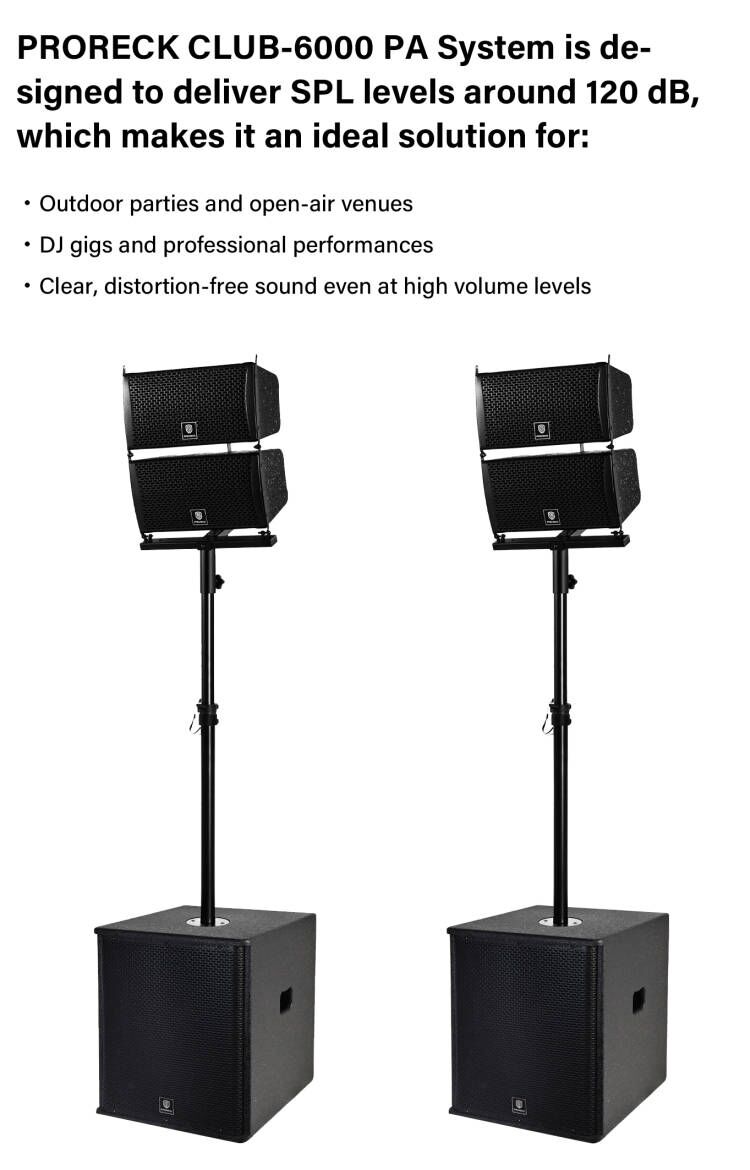
Many PRORECK PA systems are designed to deliver SPL levels around 120 dB, which offers the perfect balance between:
-
High volume for large venues or outdoor spaces
-
Clear and punchy sound without distortion
-
Enough headroom for DJs, bands, or public events
This SPL range ensures your sound cuts through background noise and reaches the entire audience, even in open-air environments. At the same time, it remains within the safety margin for short-term exposure.
Can You Trust SPL Ratings?
Some manufacturers inflate SPL specs using theoretical power ratings and perfect lab conditions. To get a reliable measure:
-
Check if the SPL is measured at 1 meter
-
Make sure the sensitivity rating and maximum input power are clearly listed
-
Look for real-world test results (e.g., user reviews, live demos)
At PRORECK, we measure SPL using actual performance data from 1 meter away, ensuring accuracy and credibility.
Conclusion: Choosing the Right PA Speaker with SPL in Mind
All in all, If the maximum SPL of a speaker is calculated using estimated maximum power and rated sensitivity values, then, no, it might not be very accurate. If the maximum SPL is calculated by measuring the actual volume from 1 meter away using precise sensitivity figures, then this data would be quite accurate. This is why I told you that you can use SPL to judge and select the audio equipment you desire. Hence:
SPL is more than just a number—it's a critical indicator of how powerful and effective your speaker will be in real-life use.
-
If you're hosting backyard parties or small gatherings, an SPL around 100–110 dB might be enough.
-
For clubs, halls, and outdoor events, 120 dB or above offers ideal power and clarity.
-
Look for trusted brands like PRORECK that provide real, tested SPL ratings and solid sound quality.
However, it's worth noting that you shouldn't solely rely on SPL as the sole reference standard, as many manufacturers often use theoretical figures to calculate the maximum SPL of their products. In this regard, SPL can only possess a certain level of reference credibility. Regardless, in today's article, we've elaborated on SPL and the significance it represents, which should provide some assistance in your selection of the desired PA SYSTEM.